

Ventilation doesn’t get the attention it deserves. It sits somewhere in the background of home maintenance — one of those things you probably never think about until something goes wrong. But for many Birmingham homeowners, particularly those in older properties or homes that have been made significantly more airtight in recent years, ventilation problems are quietly causing real damage — to the building fabric, and in some cases to the people living in it.
Why modern homes can be more problematic, not less
There’s an assumption that newer, well-insulated, draught-proofed homes are straightforwardly better. And in many ways they are. But sealing a house up tightly without addressing ventilation creates a different kind of problem: moisture and stale air have nowhere to go.
In older homes across Handsworth, Sparkbrook, and Hall Green, there was often natural ventilation happening through gaps, suspended floors, old fireplaces, and general draughtiness. Undesirable from a heating efficiency perspective, but it did mean the building could breathe. As those properties are modernised — loft insulation added, windows replaced, gaps sealed — the ventilation picture changes significantly.
What does poor ventilation actually cause?
Condensation is usually the first visible sign. It starts on windows — those pale morning patches that you wipe away without thinking too much about. But the same process is happening on any cold surface in the home, including wall surfaces, behind furniture, inside cupboards, and in corners.
Left unchecked, condensation leads to mould. And while black mould on a bathroom ceiling is unpleasant, mould growing behind a wardrobe on an external wall, or inside a loft, is more serious — both from a health perspective and in terms of what it can do to plasterwork and timber over time.
Mould spores are a known trigger for respiratory problems, particularly in children and those with existing conditions like asthma. Good home ventilation isn’t just about protecting the building — it’s about the quality of the air you’re breathing every day.
What are the main ventilation options for a home?
Trickle vents in windows — small adjustable openings that allow background ventilation without draughts. Often missing or closed in older window installations, and worth checking if you have them.
Extractor fans in kitchens and bathrooms — these are the primary moisture removal mechanism in most homes. If they’re not working efficiently, or not running long enough after a shower or cooking session, moisture builds up quickly. Humidity-controlled models that run automatically based on moisture levels are notably more effective than simple switch-controlled fans.
Positive Input Ventilation (PIV) — a whole-house ventilation system that works by drawing fresh air (typically from the loft, which is cleaner and drier than outside air) and gently pushing it throughout the property. PIV units are installed in the loft and require minimal maintenance. They work quietly in the background and are particularly effective in homes that experience persistent condensation or mould problems.
Mechanical ventilation with heat recovery (MVHR) — a more comprehensive system more commonly found in new builds, which recovers heat from extracted air before bringing fresh air in. Less common as a retrofit but increasingly relevant in high-performance homes.
What about the loft specifically?
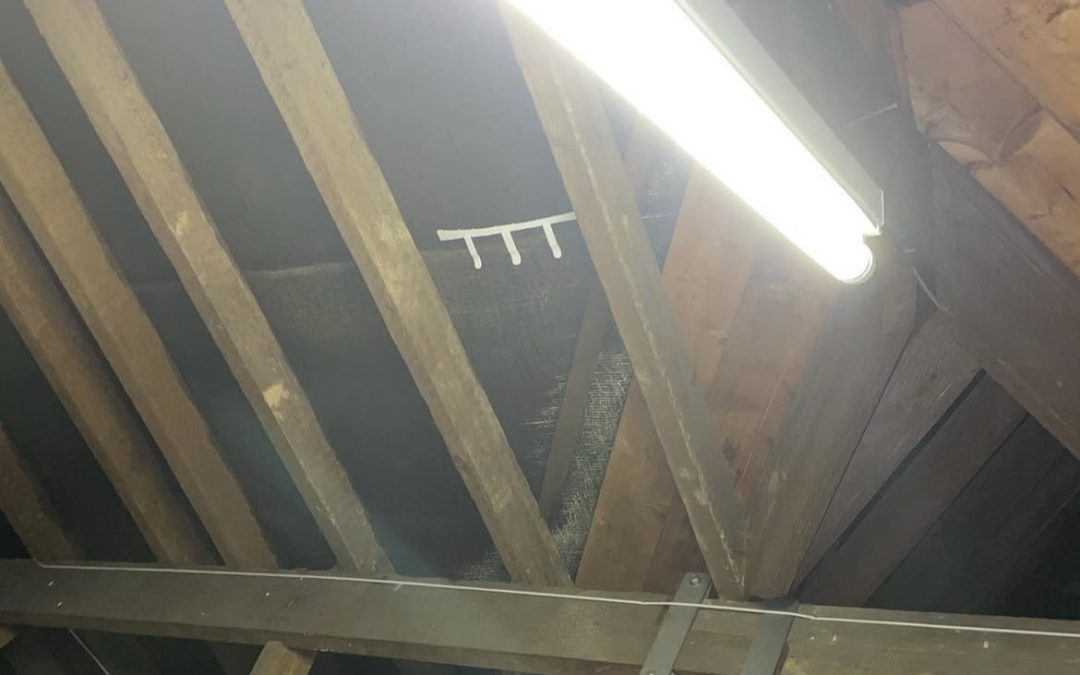
The loft needs its own ventilation quite separately from the living areas below. An inadequately ventilated loft accumulates moisture from the home below, leading to condensation on the roof deck, mould on timber, and in serious cases, structural decay. Loft ventilation typically involves soffit vents, ridge vents, or tile vents — often a combination of both to ensure proper through-flow of air.
Getting loft ventilation right matters even more once insulation has been improved, because better insulation means the loft is colder and moisture condenses more readily. The two things — insulation and ventilation — need to be considered together, not in isolation.
How do you know if your home has a ventilation problem?
Some signs are obvious: persistent condensation on windows, recurring mould in corners or behind furniture, a musty smell that doesn’t shift, or rooms that feel stuffy despite normal temperatures. Others are less visible: damp patches on ceilings, degraded plasterwork on external walls, or a loft full of moisture-damaged timbers.
If you’re seeing any of these, it’s worth getting a proper assessment done before spending money on remedial treatments. Painting over mould or increasing the heating doesn’t address the underlying cause — and it will come back.
What’s the right solution for your home?
It depends on the property, its age, construction, and the specific problem. A Victorian terrace in Balsall Heath has different ventilation needs to a 1970s semi in Erdington. The right answer involves understanding how the building currently behaves and where the moisture is coming from — not just applying a one-size-fits-all solution.
VerdantGreen Ltd work across Birmingham assessing and installing both loft ventilation and home ventilation systems. We look at the full picture rather than just treating the symptom — which means you get a solution that actually works long-term.
Concerned about ventilation, damp, or condensation in your home?
VerdantGreen Ltd survey and install home and loft ventilation solutions across Birmingham. Call 07885 367223 or visit verdantgreenltd.co.uk to get expert advice.
