

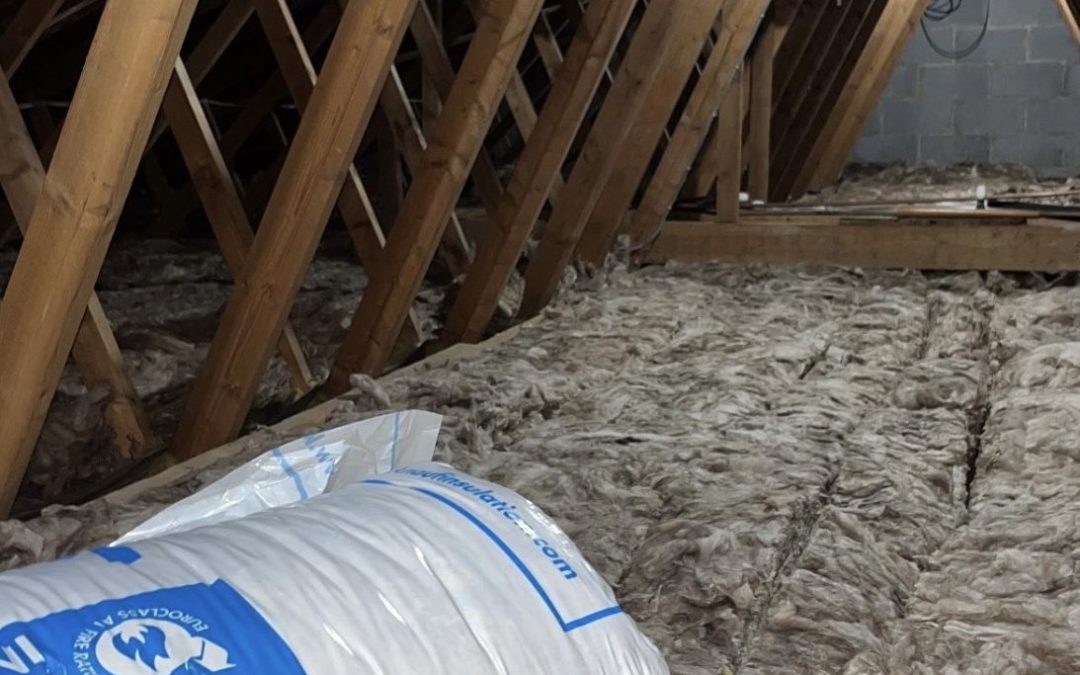
It’s one of the most common questions we hear from homeowners across Birmingham: “I want to use my loft for storage, but I’ve heard you can’t board over the insulation.” The short answer is — it depends on how you do it. Done properly, loft boarding and good insulation can absolutely coexist. Done badly, you can end up with squashed insulation that doesn’t work as it should, and a loft that’s cold in winter and costs you more to heat.
So let’s break down exactly what’s involved and how to do it right.
Why standard boarding causes problems
The issue with simply laying chipboard or timber planks directly onto the joists is that most loft joists are only around 100mm deep. The current recommended depth for loft insulation is a minimum of 270mm, which means the insulation needs to sit both between the joists and above them. If you lay boards directly on the joists, you compress whatever is sitting on top, squeezing the air out of it and dramatically reducing its effectiveness.
In many older properties in Harborne, Moseley, and Edgbaston, this is exactly what’s happened. A previous owner decided they wanted storage, laid down some boards, and inadvertently destroyed much of the insulation’s value in the process.
The right solution: raised loft boarding
The solution is to raise the boarding platform above the insulation level using specially designed legs or stilts that sit on the joists themselves. This keeps the insulation fully uncompressed underneath while giving you a solid, stable floor above.
These raised boarding systems — sometimes called loft legs or loft stilts — come in various heights depending on how much insulation you’re working with. A system sized for 270mm of insulation will typically sit around 325mm or so above the joist, leaving plenty of clearance below the boards.
What can a properly boarded loft actually hold?
More than most people expect. A professionally installed raised loft boarding system can typically support several hundred kilograms of evenly distributed load — more than enough for suitcases, seasonal items, archived paperwork, and similar household storage. It’s not designed for heavy machinery or permanent occupancy, but for typical domestic storage use; it’s genuinely practical.
Access is also worth thinking about. A loft hatch that’s too small, poorly positioned, or awkward to use will make even the best-organised storage space frustrating. Many jobs we carry out in and around Birmingham include hatch widening or replacement as part of the overall boarding package, which makes a big difference to everyday usability.
What about loft ladders?
If you’re going to use a loft for storage regularly, a decent loft ladder is worth every penny. Balanced, folding timber ladders that retract neatly into the hatch are the most popular option — they’re stable, relatively quiet, and hold up well over years of use. Aluminium options are lighter and easier to handle for some people. Either way, having a proper ladder rather than leaning a stepladder against the hatch frame makes the whole thing far more practical and safer.
Do I need to insulate the loft hatch itself?
Yes — and this is often overlooked. The loft hatch is effectively a hole in your insulation layer. An uninsulated hatch cover can be responsible for a disproportionate amount of heat loss. A well-fitted hatch cover with insulation bonded to the back and a decent draught seal around the frame makes a noticeable difference, and it’s a small extra step that’s easy to include when the loft is already being worked on.
Is planning permission needed for loft boarding?
In the vast majority of cases, no. Loft boarding is considered a standard home improvement that doesn’t alter the structure of the property, so permitted development rights apply for most homes in Birmingham and across the West Midlands. The exception might be if you’re in a listed building or certain types of conservation area — but for a typical residential property in Sutton Coldfield, Great Barr, or Selly Oak, there are no planning hurdles to clear.
Getting the job done properly
The difference between a properly installed raised boarding system and a rushed DIY job isn’t just about aesthetics — it’s about whether the insulation actually continues to work, and whether the boards are genuinely safe to load. The joists in older homes vary considerably in condition, and without checking them properly first, it’s easy to end up with a floor that isn’t as stable as it looks.
Thinking about loft boarding for storage in Birmingham?
VerdantGreen Ltd install raised loft boarding systems across the city and wider West Midlands. Get in touch on 07885 367223 or visit verdantgreenltd.co.uk for a free quote.
